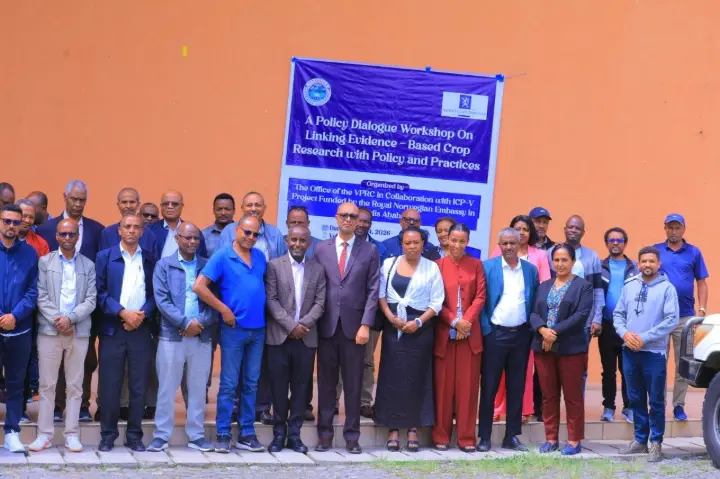
Office of the Vice President for Research and Collaboration at Hawassa University, in collaboration with ICP V project funded by the Royal Norwegian Embassy in Addis Ababa, organized a policy dialogue workshop on “Linking Evidence-based Crop Research with Policy and Practice” that realized the convergence of agricultural science and government.
Dr. Tafesse Matewos, V/President for Research & Collaboration, stated in his opening speech that Hawassa University researchers have been working on laboratory and field researches since the inception of Awassa Colleg of Agrculture haf a century ago, and had immensely contributed towards improving crop productivity at a national level. “However”, he added, “bridging the gaps between laboratory and field research and policy implementation is no longer an option, but a necessity if we aim for national food and nutrition security”.
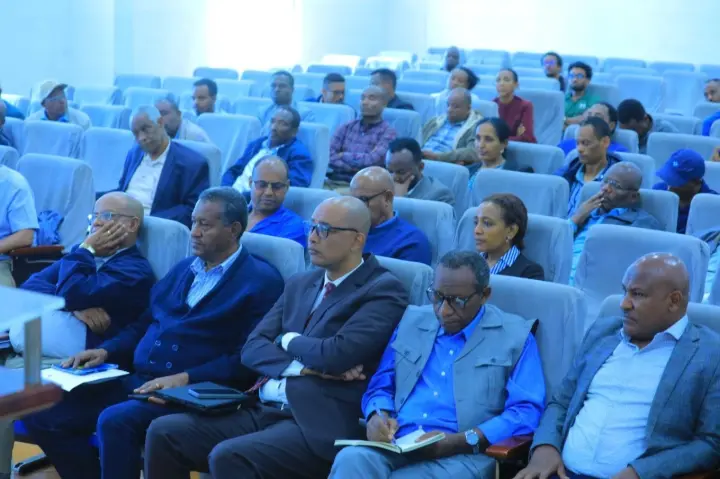
Dr. Tafesse remarked that the policy dialogue has three major goals: to critically evaluate how Ethiopia's crop policy and strategy reforms have influenced productivity over time and their actual contribution towards sustainable agricultural transformation; to assess the achievements, operational challenges, and overall food security impacts of national flagship initiatives, leveraging empirical evidence to address implementation gaps and define clear priorities; and to examine crop productivity trends, key drivers, and persistent yield gaps to identify research priorities that will build agricultural resilience, boost yield, and secure the Ethiopian food systems.
He also expressed heartfelt gratitude and appreciation for the Royal Norwegian Embassy in Addis Ababa for the continued support, Hawassa University researchers for their dedication and commitment, Prof. Andargachew Gedebo for his leadership of the ICP V project, the college’s management and the workshop organizers for being able to bring together scientists and government representatives for a grand agenda.
Dr. Tewodros Ayalew, an agricultural researcher from HU, presented a review of the evolution of Ethiopian agriculture policy and major reforms over the years, flagship national initiatives, and crop productivity trends as well as bottlenecks and the way forward as a starting point of the policy dialogue.
Representatives of the scientific community and government bodies in the agricultural sector from both federal and regional offices attended the workshop and discussed ways to amend gaps in linking evidence-based research, policy design and implementation for the future as a way of transforming Ethiopian agriculture sector and food system which covers the lion’s share of the national GDP.