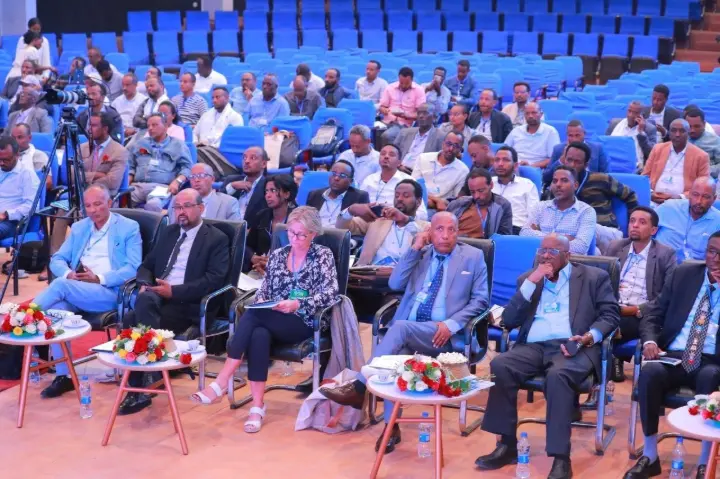
Hawassa University, in collaboration with the Norwegian University of Life Sciences (NMBU) and Mekelle University, is hosting an international conference with the theme, “Strengthening the Ethiopian Food System for Resilience, Sustainability and Inclusive Development.”
The two-day conference brings together national and international scholars, researchers, policymakers, development partners, and other stakeholders to discuss evidence-based approaches to building a resilient, sustainable, and inclusive food system in Ethiopia.
In his opening remarks, Dr. Chirotaw Ayele, President of Hawassa University, said the conference provides an important platform for meaningful dialogues, knowledge exchange, and the establishment of strategic partnerships among national and international stakeholders. He emphasized that the gathering aims to identify evidence-based and scalable solutions to improve food security and nutrition, protect environmental sustainability, promote economic growth, and strengthen communities’ capacity to withstand the growing impacts of climate change.
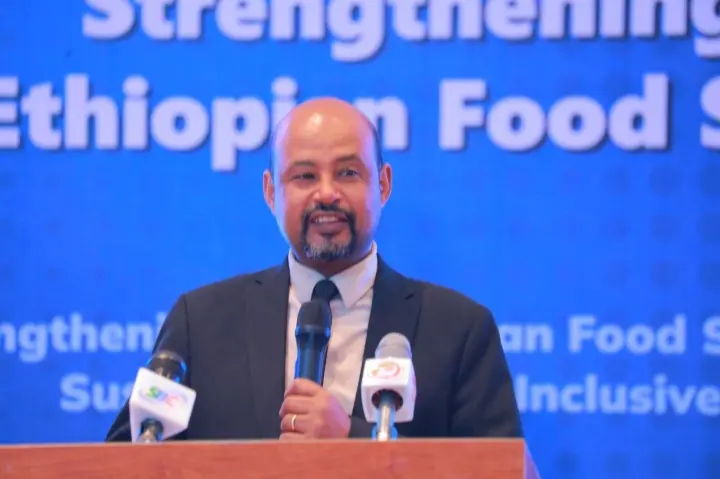
Dr. Chirotaw further noted that the conference would facilitate the exchange of scientific findings, best practices, and policy innovations that contribute to the comprehensive transformation of Ethiopia’s food systems in line with national development priorities and the Sustainable Development Goals (SDGs).
Speaking on behalf of Mekelle University, Dr. Eyasu Yazew, V/President for Research and Community Engagement, underscored that food systems should not be viewed merely as policy objectives but as fundamental human rights and essential foundations for social stability and prosperity.
He highlighted the central role of food systems in achieving Ethiopia’s national priorities, including food and nutrition security, job creation, climate resilience, and economic transformation. However, he pointed out that translating innovative ideas and research evidence into effective decisions, and ensuring that policies deliver tangible results on the ground, remain significant challenges.
The first keynote speaker, Prof. Firew Tegegne, Deputy Director of the Agricultural Transformation Institute, highlighted Ethiopia’s ongoing efforts to address food system challenges through coordinated institutional and policy interventions.
He explained that seven clusters had been identified to address key challenges within the food system. He also noted that Ethiopia had established a formal food system governance model built around four pillars: federal government, regional governments, the private sector, and other stakeholders. He further emphasized the progress achieved through the coordinated implementation of initiatives supporting the country's food system transformation agenda.
The second keynote speaker, Her Excellency Margrethe Volden, Deputy Director of Norwegian Church Aid in Addis Ababa, highlighted Ethiopia’s significant potential, including its diverse agro ecological zones, rich indigenous knowledge, and strong culture of innovation. Nevertheless, she noted that farmers continue to face multiple challenges, including droughts, floods, land degradation, limited market access, and increasing pressure on land due to population growth.
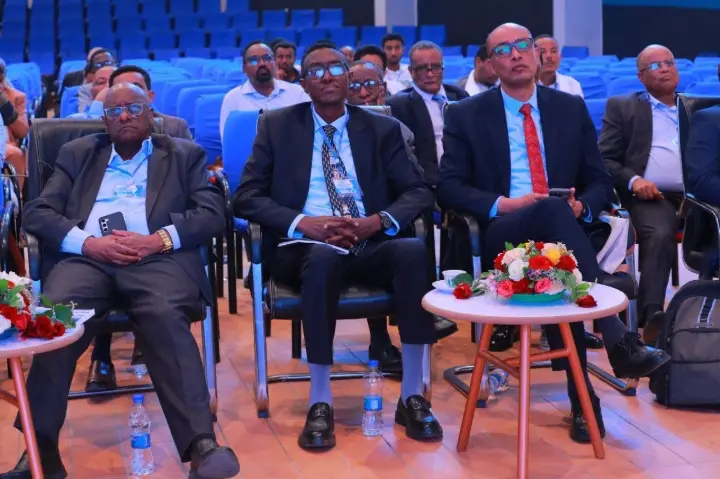
In her remarks, she emphasized four key messages: producing differently rather than simply producing more, building resilience before climate and other shocks occur, ensuring that agricultural production translates into economic prosperity, and recognizing that transforming food systems requires collective action and collaboration.
The third keynote speaker, Prof. Muyiwa Samuel Adaramola, representative of NMBU and Academic Coordinator of the ICP V Institutional Collaboration Program, presented a comprehensive perspective on food systems, explaining that they encompass the entire process from farm to table, including production, processing, distribution, and consumption.